.png)
Should You Downsize Your Home? Benefits, Practical Steps, and How to Decide
Homeowners often reach a point where a larger home no longer fits their lifestyle. Whether your children have moved out, home maintenance has become overwhelming, or you’re simply looking to reduce monthly expenses, downsizing can be a practical way to simplify life while improving financial flexibility.
The decision isn’t just about moving into a smaller house. It’s about choosing a home that better supports your current needs, budget, and long-term goals.
At a Glance
- Downsizing can reduce housing costs, maintenance, and utility bills.
- A smaller home may free up equity for retirement, travel, or other priorities.
- The right time to downsize depends on your finances, lifestyle, and future plans.
- Planning ahead helps make the transition smoother and less stressful.
- Protecting your new home with the right coverage can help avoid unexpected repair costs.
Why Many Homeowners Decide to Downsize
Living in a home that once made perfect sense doesn’t always remain the best fit. As circumstances change, so do housing needs.
Some of the most common advantages include:
- Lower monthly mortgage or housing expenses
- Reduced utility and maintenance costs
- Less time spent cleaning and maintaining the property
- More accessible layouts that may better support aging in place
- The opportunity to unlock home equity for other financial goals
- Easier travel thanks to fewer household responsibilities
For many homeowners, downsizing isn’t about giving something up. It’s about gaining more freedom with less financial and physical upkeep.
Is Downsizing the Right Choice?
Before putting your home on the market, take an honest look at your current situation.
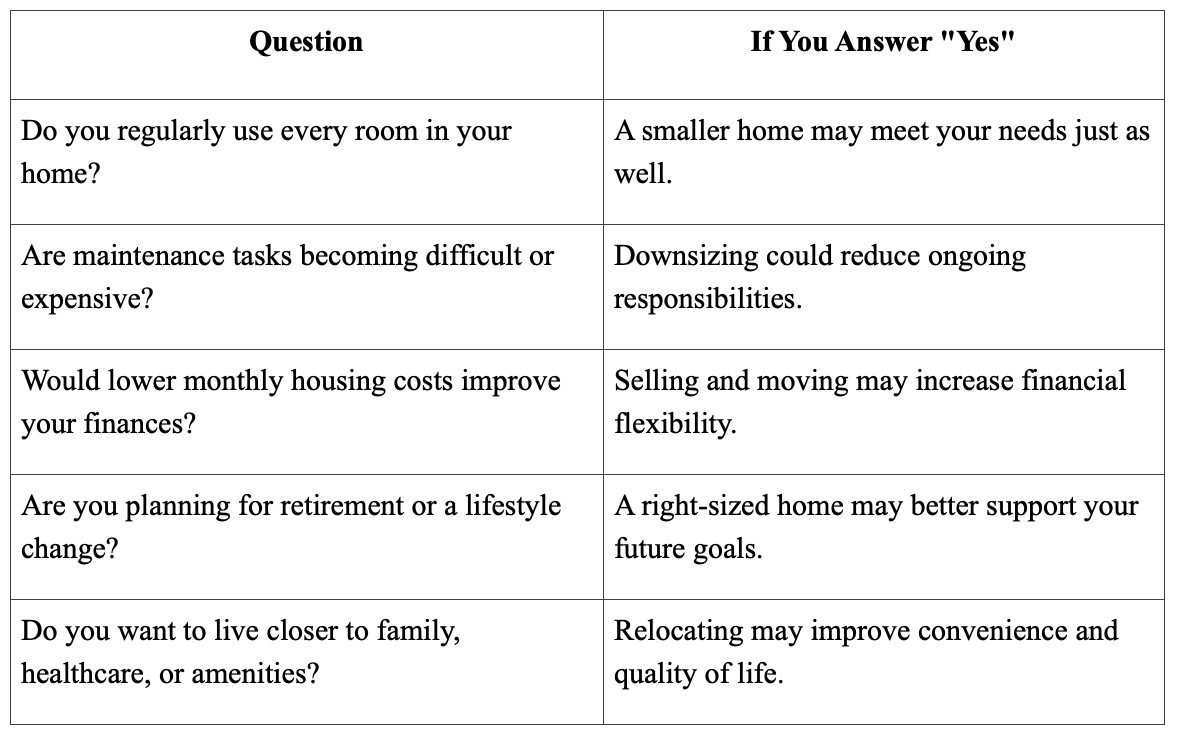
A Simple Way to Prepare for a Smaller Home
Moving into a smaller property requires thoughtful planning, especially if you’ve lived in your current home for many years.
Downsizing Checklist
- Review your budget and determine your ideal housing payment.
- Decide which features are essential in your next home.
- Measure furniture before deciding what to keep.
- Sort belongings into keep, donate, sell, and recycle categories.
- Research neighborhoods that fit your lifestyle and future needs.
- Estimate moving expenses and other closing costs.
- Create a timeline that allows enough time for decluttering before listing your home.
Breaking the process into manageable steps makes the move feel much less overwhelming.
Protecting Your Smaller Home from Unexpected Repair Costs
One benefit of a smaller home is that ongoing maintenance often becomes more manageable. However, unexpected repairs can still happen.
It’s important to understand the difference between homeowners insurance and a home warranty. Homeowners insurance generally covers events such as fire damage, storm damage, and theft. If your heating system stops working or your dishwasher suddenly breaks down from normal wear and tear, those repairs typically aren’t covered.
That’s where home warranty plans can provide additional protection. A home warranty is an annual renewable contract that can help cover the repair or replacement of major home systems—including heating, cooling, electrical, and plumbing—as well as many household appliances when they experience covered mechanical breakdowns. For homeowners looking to manage expenses after downsizing, this added protection may help reduce the impact of unexpected repair bills.
Looking Beyond Square Footage
Many homeowners initially worry they’ll miss having extra space. In reality, they often discover that a well-designed smaller home provides everything they actually use every day.
Rather than focusing on total square footage, consider questions like:
- Does the home have enough storage?
- Is the floor plan functional?
- Will maintenance be manageable over the next 10 to 20 years?
- Is the neighborhood convenient for shopping, healthcare, and recreation?
A home that supports your daily routine can be far more valuable than one with unused rooms.
Helpful Resource for Planning Your Move
If you’re beginning the downsizing process, the National Association of Realtors offers practical guidance on buying and selling homes, understanding the housing market, and preparing for a move.
Learn more here:
https://www.nar.realtor/
Their educational resources can help homeowners better understand each stage of the buying and selling process.
Frequently Asked Questions
Does downsizing always save money?
Not necessarily. Savings depend on factors such as home prices, mortgage rates, taxes, insurance, homeowners association fees, and moving costs. Calculating your expected monthly expenses before purchasing another home is important.
When is the best time to downsize?
Many homeowners begin considering it before retirement, after children move out, or when maintaining a larger property becomes more difficult or expensive.
Should I sell before buying another home?
That depends on your financial situation and local housing market. Some homeowners prefer selling first to know exactly how much equity they’ll have available, while others purchase first if their finances allow.
What should I do with belongings I no longer need?
Many homeowners donate usable items, hold garage sales, sell valuables online, or give meaningful possessions to family members before moving.
Moving Toward a Home That Fits Your Life
Downsizing isn’t simply about choosing a smaller house—it’s about selecting a home that better matches your current priorities. A thoughtful approach today can create greater flexibility, lower stress, and a home that feels like the right fit for years to come.
